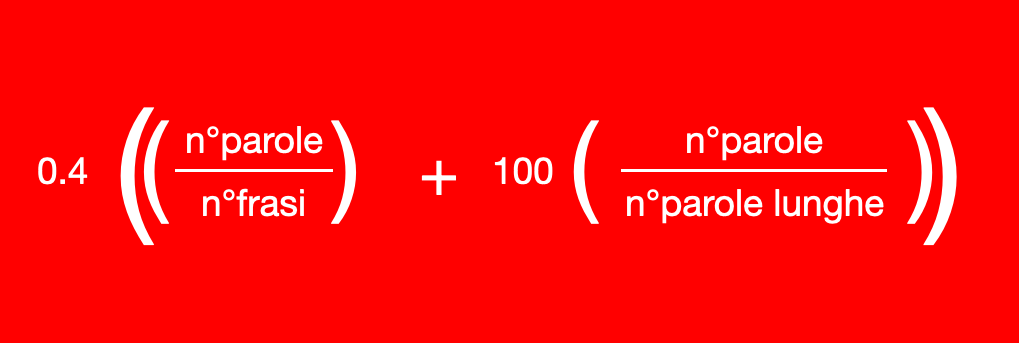

In this historical moment, in which we are increasingly confined to our homes, the number of written communications such as emails, posts, or messages that we receive and send has greatly increased. Therefore, it is increasingly important to take care of how we write. The way we formulate our writing, beyond the content, also conveys an idea of ourselves to others and thus has an impact on our reputation. If you think about it, you probably also find yourself thinking “this person is clear, inspires trust” or “this person is confused” thanks to the words we read. It is therefore useful to work on our written communication style to convey an idea of ourselves that matches our expectations. Throughout our days, we switch from the role of writer to that of reader several times, and when we are in the first role, we rarely try to put ourselves in the shoes of the second. But if we pause for a moment to think about how we behave as readers, we realize how much we appreciate those who write clearly, effectively, concisely, but completely. This is because, in general, we are readers who are in a hurry, reading immersed in a sea of distractions and often on the small screen of a smartphone. By now, receiving an email that is longer than one scroll on a smartphone, for many, is synonymous with effort. In this context, it is good to ask ourselves what we want to achieve when we write to someone and how we can achieve it given the conditions in which they will probably read us. When we send an email, a message, or publish a post on LinkedIn, before launching those words into the ether, let's focus for a second on what we want to achieve with that communication. A first step, trivial but not obvious, can be that our text is actually read. Trivial, but not obvious. Given the amount of emails and messages we receive in a day, it is very easy to be trashed or simply ignored. Of course, it also depends on the role we have in relation to the person who will receive our words, but still, writing with the intention that the other person really reads us is useful to achieve our goal. And what is our goal? In the workplace, when we write, there is always a purpose, we do not do it for the pleasure of jotting down words on a piece of paper. So our email aims to generate an action from the other person, for example, to reply to us, give us more information, carry out certain procedures, etc. Otherwise, why would we write? So to achieve our goal, we can clean up our writing so that the reader we are addressing is encouraged to read us and is clear about both the content of our message and what we would like from him/her. Why clean up our writing? To make life easier for our reader. If we make their life easier, they will read us more willingly and we increase the chances that they will dedicate even just a few seconds to us and maybe even do what we expect from them. How can we simplify what we write? A practical tool is the Gunning Index or Fog Index. It is a formula for analyzing the complexity of a text by providing a number that Gunning identifies as the number of years of schooling needed to read that text without difficulty. In the following image, there is the formula to calculate it. Calculating the numbers for the formula is simple: number of words = number of words in the text number of sentences = number of sentences ending with a period number of long words = number of words composed of at least 4 syllables, excluding any proper names or technical terms Calculating the Gunning index of a text allows you to measure its readability. To help our readers, we should therefore have the lowest index possible. To lower it, we can replace long words with short synonyms and eliminate unnecessary words.