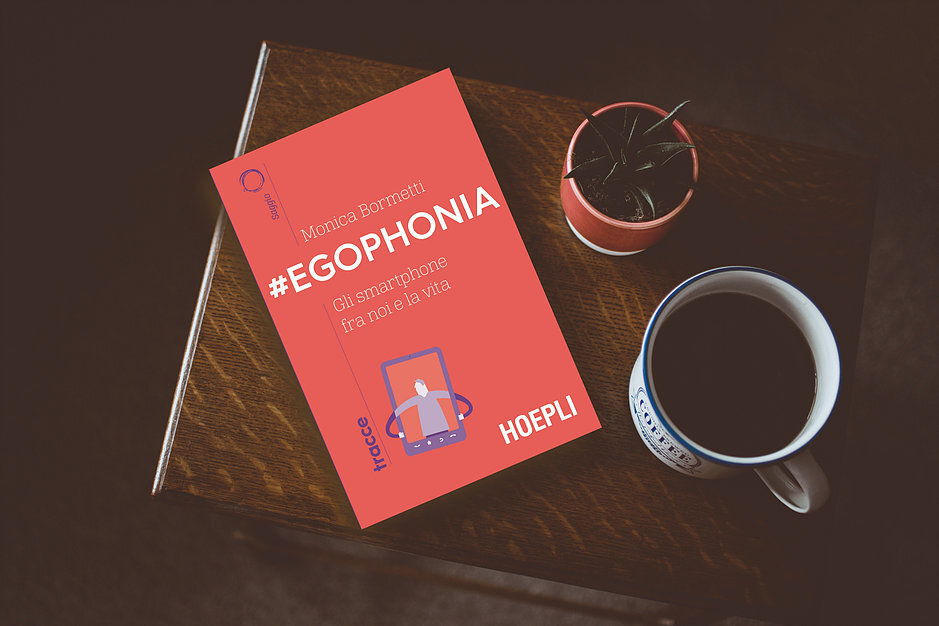
On the occasion of the release of the book #Egophonia - smartphones between us and life, published by Hoepli, we asked the author and colleague Monica Bormetti to introduce the topic in a short introductory article. Enjoy your reading. Using digital devices consciously You can no longer be without a smartphone and in some way we are increasingly dependent on them. The 2018 report by We are social says that in Italy we spend an average of 1h53 a day on social media. However, a clarification must be made: internet addiction does not exist, at least there is no agreement in the scientific community on this issue. The point, however, is that many notice an increasingly visceral relationship, sometimes perceived as unhealthy, with digital devices (whether it concerns themselves or friends, colleagues, and relatives). In my work on digital well-being, I interact with people who want to build new and healthy habits in using digital devices, and there are some recurring themes. Among professionals, the perception is often that of increased stress levels and a decrease in skills such as attention and memory. Operating in digitalized contexts where managing notifications, client and customer pressure merges with the need to build an online reputation, requires us to be good tightrope walkers. In all this, however, stress increases and more and more "knowledge workers" feel overwhelmed by the amount of emails, phone calls, contacts with people, etc. to maintain for their work, almost with a nostalgic note for analog times. Beyond the perceived fatigue, there is also another factor to consider: the impact on cognitive abilities and therefore on work performance. The human brain is plastic, meaning that depending on the stimuli we give it and the life we lead, it shapes and strengthens or weakens certain neural circuits. So if we train our minds to think deeply, maintain concentration, and memorize, we will improve in these activities. If instead we get used to making our thoughts jump around like a ping pong ball, the result will be a mind less able to maintain focus for long. So learning to use social and digital media as a resource and not as places that train us to be ping pong balls becomes useful in order to preserve our abilities and grow. I propose a reflection to find a balance in the use of digital media, in five steps of the SMART method: 1. Study your behavior There are several mechanisms used by social media to increase our usage; if you learn to recognize them, you can realize when your behavior is automated and therefore you no longer have control. One is variable reinforcement: when you receive a reward randomly after an action you take, your brain will learn to perform that action more often than if you received a reward every time. So if in slot machines you win only occasionally and thus learn to click often, with social media you also only occasionally receive interesting notifications and so you learn to check them often. Another mechanism is bottomless: web platforms have no end in their newsfeed screens and our brain is programmed to keep going until it reaches an end (just as we want to finish the food on our plate, even if we are full, so we want to scroll to the bottom even if we are not looking for anything in particular). 2. Clarify your goals When you open a social platform, more than ever, be clear about why you are doing it, what is your priority at that moment? Defining what is truly important to you on social media can be done by starting to turn off all notifications; at that point, actively and consciously, you can reactivate only those you really consider useful and essential. 3. Implement the change You need rules to manage your social media, as in many other areas of life. Some simple but effective strategies: set zones and times when you do not use social media (examples: before going to bed, before arriving at the office, at the table, during an appointment, etc.). Use tools to monitor your online behavior (iOS has introduced Screen Time, but there are also Moment and BreakFree). 4. Requalify your time Working to rebalance your use of social media often results in recovering time and so, use that time to really recharge. Eliminate or at least reduce multitasking from your work and leisure routines: the brain gets tired and productivity drops. Carve out moments to do nothing, it allows your mind to recharge. 5. Track into the future Schedule check-up moments in your calendar to review how you use social media, because we humans tend to fall back into old habits very easily, especially when we are tired and fatigued. The use of social media can be as enriching as it is draining, but you have to stay alert since the goal of those who build these platforms is very often to increase the time you spend there, not necessarily to give you an advantage, especially when it comes to free services. Monica Bormetti
I support the DLM-Partners team in the realization of Workshops with a particular focus on the relationship between people and digital. I am the author of #Egophonia - smartphones between us and life - published by Hopeli. I have a degree in clinical and community psychology. I have a background as a communications manager for a digital start-up in the tourism sector.

Egophonia - gli smartphone fra noi e la vita
Egophonia - gli smartphone fra noi e la vita
2019-04-09 13:40
2019-04-09 13:40
Array() no author 89563
psicologia, benessere, social-media, internet, social-network, benessere-digitale,
L’uso dei social può essere tanto arricchente quanto prosciugante, ma devi essere tu a stare vigile visto che l’obiettivo di chi costruisce queste piattafo
Cookie & Privacy Policy
Cookie & Privacy Policy